About
The annual NSF CSSI, CyberTraining, and SCIPE PI Meeting brings together principal investigators and senior personnel funded under these programs to share progress, exchange ideas, and build community across the cyberinfrastructure research ecosystem.
Reports
Speakers
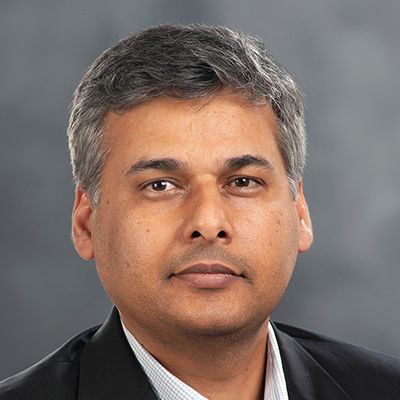
Prof. Neeraj Rai (Website)
Mississippi State University
Neeraj Rai is the Ergon, Inc. Distinguished Professor in the Dave C. Swalm School of Chemical Engineering and the Center for Advanced Vehicular Systems at Mississippi State University. His research integrates molecular modeling, high-performance computing, data science, and machine learning to study interfacial molecular science for catalysis and to design and develop optoelectronic materials. He also develops computational tools and training resources that broaden access to advanced computing and enable data- and computation-intensive research. He led the establishment of i-CoMSE, the NSF-supported Institute for Computational Molecular Science Education, which trains the next generation of scientists and engineers in computational molecular science and engineering.
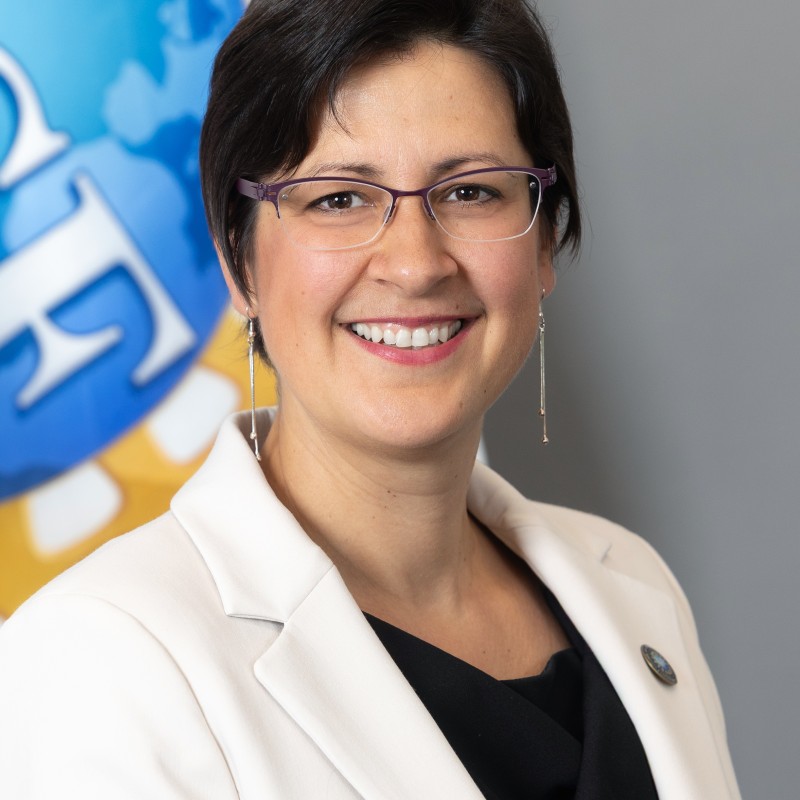
Dr. Irina Dolinskaya (LinkedIn)
National Science Foundation
Irina Dolinskaya, Ph.D., is directorate head for the U.S National Science Foundation Computer and Information Science and Engineering (NSF CISE) Directorate at the U.S. National Science Foundation (NSF). Prior to becoming a directorate head, she served as a deputy division director in NSF’s Computing and Communication Foundations division, and as program director in NSF’s Division of Civil, Mechanical & Manufacturing Innovation. Prior to joining NSF, Irina Dolinskaya was a faculty in the Industrial Engineering and Management Sciences department at Northwestern University. She obtained M.S. and Ph.D. degrees in Industrial and Operations Engineering from the University of Michigan, and a B.S. degree in Industrial Engineering from the University of Florida.
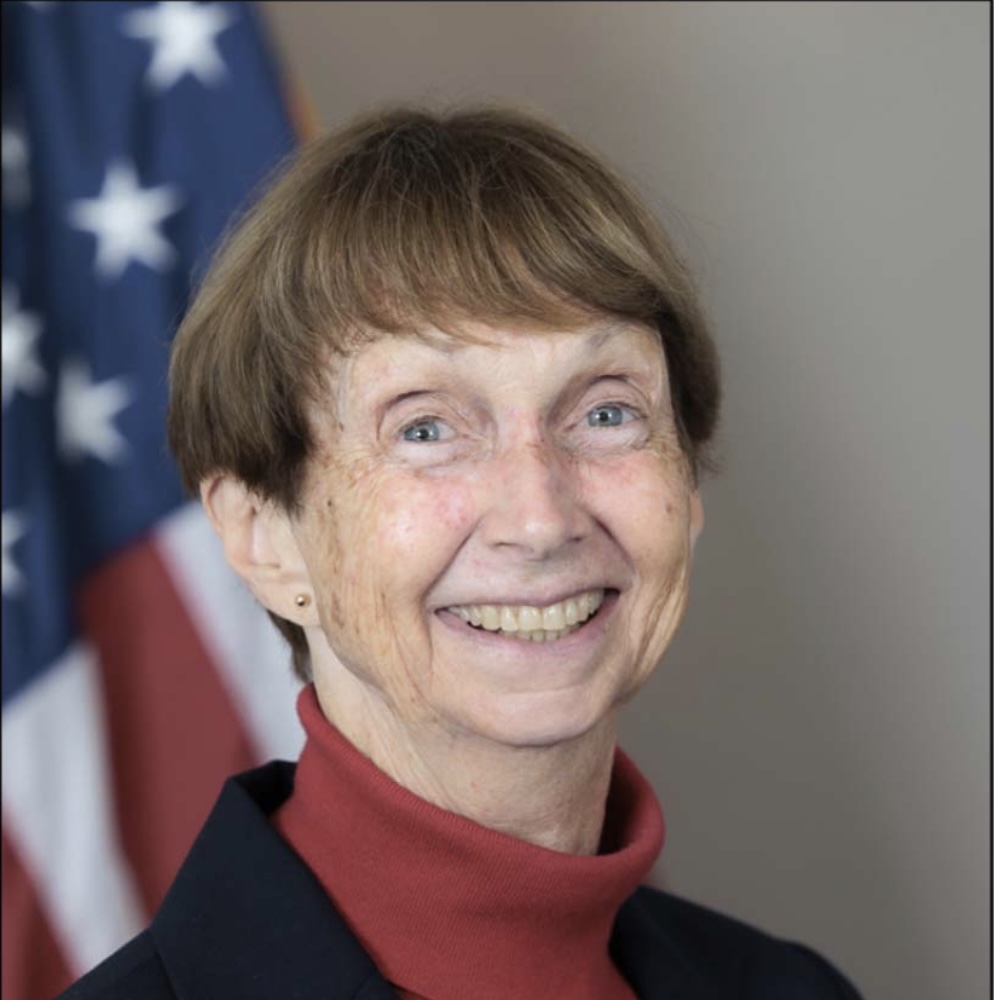
Dr. Amy Walton
National Science Foundation
Amy Walton is the Deputy Directorate Head for the Directorate for Computer and Information Science and Engineering (CISE). Prior to her current role, she was a Program Director in the Office of Advanced Cyberinfrastructure, contributing to several cross-foundational activities in which NSF has a leadership role: Harnessing the Data Revolution, emphasizing data-intensive research in science and engineering; enabling Quantum Leap, through foundries for quantum materials science, engineering and information; Cyberinfrastructure for Sustained Scientific Innovation, focused upon the availability and interoperability of science data cyberinfrastructure; and EarthCube, an integrated geoscience research program.
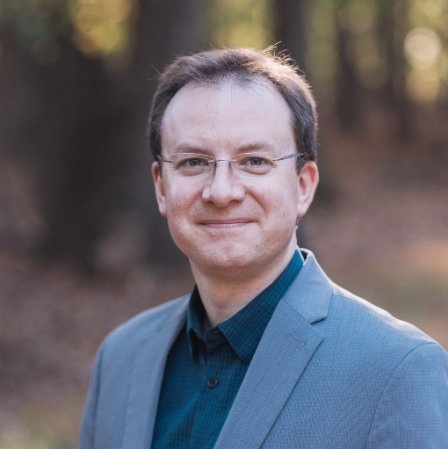
Dr. Benjamin Brown (Contact)
Department of Energy
Dr. Benjamin (Ben) Brown is the Director of the Facilities Division in the U.S. Department of Energy’s Office of Science, Advanced Scientific Computing Research program. Ben leads and executes the conception, construction, and operation of DOE’s world-leading research supercomputing, data, and networking infrastructure to enable the DOE mission and the national research enterprise. Ben is the federal executive lead for the American Science Cloud, the open science infrastructure for the Genesis Mission Platform, and is the lead architect of the Department’s Integrated Research Infrastructure effort to achieve seamless interoperability of experimental, observational, computational, network, and data infrastructure. Ben has been a member of the federal Senior Executive Service since 2020. He has over twenty years of government service with extensive experience in research infrastructure strategy, budget formulation, risk management, and project management. He is a Ph.D. experimental physicist with specialization in ultrafast optics, ultracold atomic physics, and quantum information science.
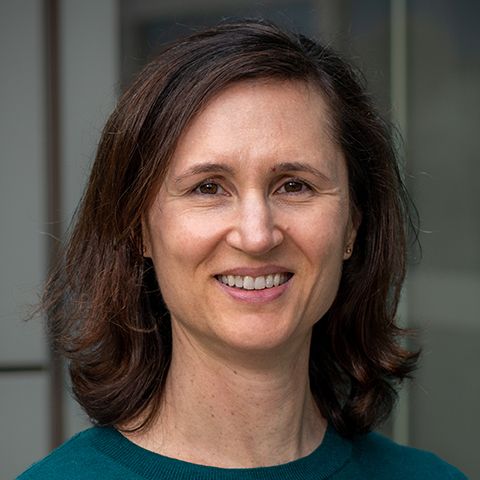
Dir. Katie Antypas (OAC Website)
National Science Foundation
Katie Antypas is NSF’s Director of the Office of Advanced Cyberinfrastructure which supports the development and deployment of advanced data, computing, and networking infrastructure, as well as the software, tools, services, and training for the research community. It is also the Office responsible for the launch and deployment of the National AI Research Resource (NAIRR) Pilot. Prior to joining NSF Katie spent 17 years at Lawrence Berkeley National Laboratory at the National Energy Research Scientific Computing Center in a variety of leadership roles leading the deployment of large-scale high-performance computing systems and supporting the scientific research community using them. She has an M.S. in CS from the University of Chicago and a Bachelor degree in Physics from Wellesley College.
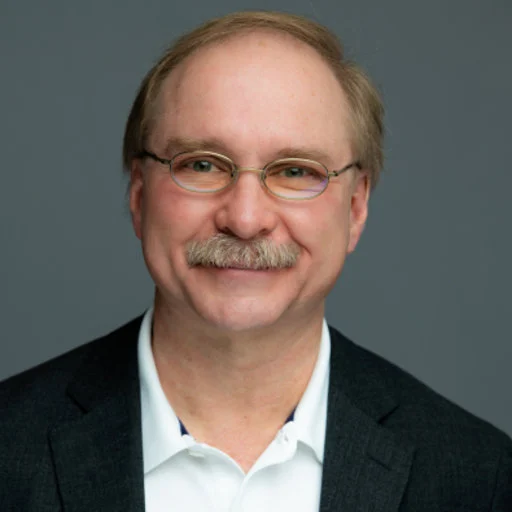
Prof. Kenneth Merz (Website)
Cleveland Clinic
Kenneth M. Merz Jr., Ph.D. is a Quantum Molecular Scientist in the Center for Computational Life Sciences at Cleveland Clinic. His research interests include computational chemistry, molecular simulation, drug discovery, and quantum computing applications in the life sciences. Prior to joining Cleveland Clinic, he served as a University Distinguished Professor and the Joseph Zichis Chair in Chemistry at Michigan State University and held faculty appointments at the University of Florida and Pennsylvania State University. Dr. Merz is Editor-in-Chief of the Journal of Chemical Information and Modeling and has authored more than 400 scientific publications.
Prof. Alan Sussman (Website)
University of Maryland, College Park
Alan Sussman is a Professor in the Department of Computer Science at the University of Maryland, College Park, where he also serves as the Associate Chair for Undergraduate Education. He previously served as a Program Director at the NSF within the CISE Directorate. He focuses on parallel and distributed systems, high-performance computing, and computer science education.
Program
| Time | Event | Details |
|---|---|---|
| Sunday, Sept. 13 | ||
| 5:00pm | Welcome Reception & Badge Pick-up | Please join us in the Strathmore room (lower level) for a welcome reception. Hors d'oeuvres will be served. You can also pick up your badge or register. |
| Monday, Sept. 14 | ||
| 7:45am | Badge Pick-up & Breakfast | Please join us in the Grand Ballroom (Salons F-H) to pick up your badge and have breakfast. The welcome table will also be available for late registration. |
| 8:45am | Opening Remarks by Prof. Neeraj Rai
Mississippi State University Slides (PDF) | Prof. Rai will deliver opening remarks in the Grand Ballroom (Salon E). |
| 9:00am | CISE updates and strategic directions by Dr. Irina Dolinskaya
and Dr. Amy Walton
National Science Foundation Slides (PDF) | Grand Ballroom (Salon E). Leadership from the NSF CISE directorate will discuss major updates and priority directions for the directorate. |
| 9:30am | An Update on the Genesis Mission Platform by Dr. Benjamin Brown
Department of Energy Slides (PDF) | Grand Ballroom (Salon E). Since the Administration announced the Genesis Mission in November 2025, the DOE Office of Science Advanced Scientific Computing Research (ASCR) program has advanced the strategy and implementation approach to the Genesis Mission Platform: the federated computing, data, and networking infrastructure that will enable integrated AI workflows. This presentation will provide a status update on these efforts, and specifically address our ambitions for the Genesis Platform in the contexts of AI, HPC, and Quantum Information Science. |
| 10:00am | Break | - |
| 10:15am | Poster Session I | Grand Ballroom (Salons A-D). Check your assignments to see if you are presenting. Digital Poster Links |
| 11:45am | Lunch | Please join us in the Grand Ballroom (Salons F-H) for lunch. |
| 12:45pm | Poster Session II | Grand Ballroom (Salons A-D). Check your assignments to see if you are presenting. Digital Poster Links |
| 2:15pm | Break | - |
| 2:30pm | Breakout Sessions | Check your assignments to see your breakout session and its room. All rooms are on the lower level. Digital Poster Links and Breakout Room Map |
| 4:15pm | Break | - |
| 4:30pm | Poster Session III | Grand Ballroom (Salons A-D). Check your assignments to see if you are presenting. Digital Poster Links |
| 6:00pm | Main Reception | Please join us for a reception in the Grand Ballroom (Salons F-H) following the poster session. Hors d'oeuvres will be served. |
| Tuesday, Sept. 15 | ||
| 8:00am | Badge Pick-up & Breakfast | Please join us in the Grand Ballroom (Salons F-H) for breakfast. The welcome table will still be available for badge pick-up and late registration. |
| 9:00am | Update from the NSF Office of Advanced Cyberinfrastructure by Dir. Katie Antypas
National Science Foundation Slides (PDF) | Grand ballroom (Salon E). In this talk Dir. Antypas will highlight new programs and recent awards relevant to the Cyberinfrastructure community. |
| 9:30am | Applications of Quantum Computers in Chemistry by Prof. Kenneth Merz
Cleveland Clinic Slides (PDF) | Grand Ballroom (Salon E). Computing hardware has long followed Moore’s Law; however, its steady gains in computational performance are expected to plateau in the coming years. As a result, the computer hardware industry is actively exploring new paradigms to sustain performance growth. Quantum computing offers a promising pathway, though current quantum hardware remains limited by significant noise, necessitating effective error mitigation strategies. Recently, IBM introduced subspace quantum diagonalization (SQD), a method for solving electronic structure problems relevant to chemistry. SQD exemplifies the emerging paradigm of quantum-centric supercomputing (QCSC), in which quantum processors are deployed for targeted subproblems while classical hardware manages the remaining computational workload. In this presentation, I will review the theoretical foundations of the SQD method and highlight its applications in chemistry, including the study of intermolecular interactions, calculations on large drug-like molecules and biomolecules, the incorporation of solvation effects, and the integration of SQD with statistical mechanical approaches. |
| 10:00am | Breakout Reports Slides (PDF) | Grand Ballroom (Salon E). Speakers from each breakout section will report on their respective sessions and findings. Digital Poster Links |
| 11:00am | Poster Session IV | Grand Ballroom (Salons A-D). Check your assignments to see if you are presenting. Digital Poster Links |
| 12:30pm | Closing Remarks by Prof. Alan Sussman University of Maryland, College Park | Prof. Sussman will deliver closing remarks in the Grand Ballroom (Salon E) |
| 12:45pm | Lunch | Please join us in the Grand Ballroom (Salons F-H) for lunch. |
| 1:45pm | Meeting adjourned | Thank you for joining the PI meeting. Please travel safely. |
Posters
Digital versions of posters are available here.
Venue
Address
Bethesda North Marriott Hotel & Conference Center
5701 Marinelli Road,
Rockville,
MD